Comparison
Germany vs Australia vs Ireland for South Asian Students 2026
Free tuition vs open work rights vs EU tech access — head-to-head across cost, visa, and PR pathways.
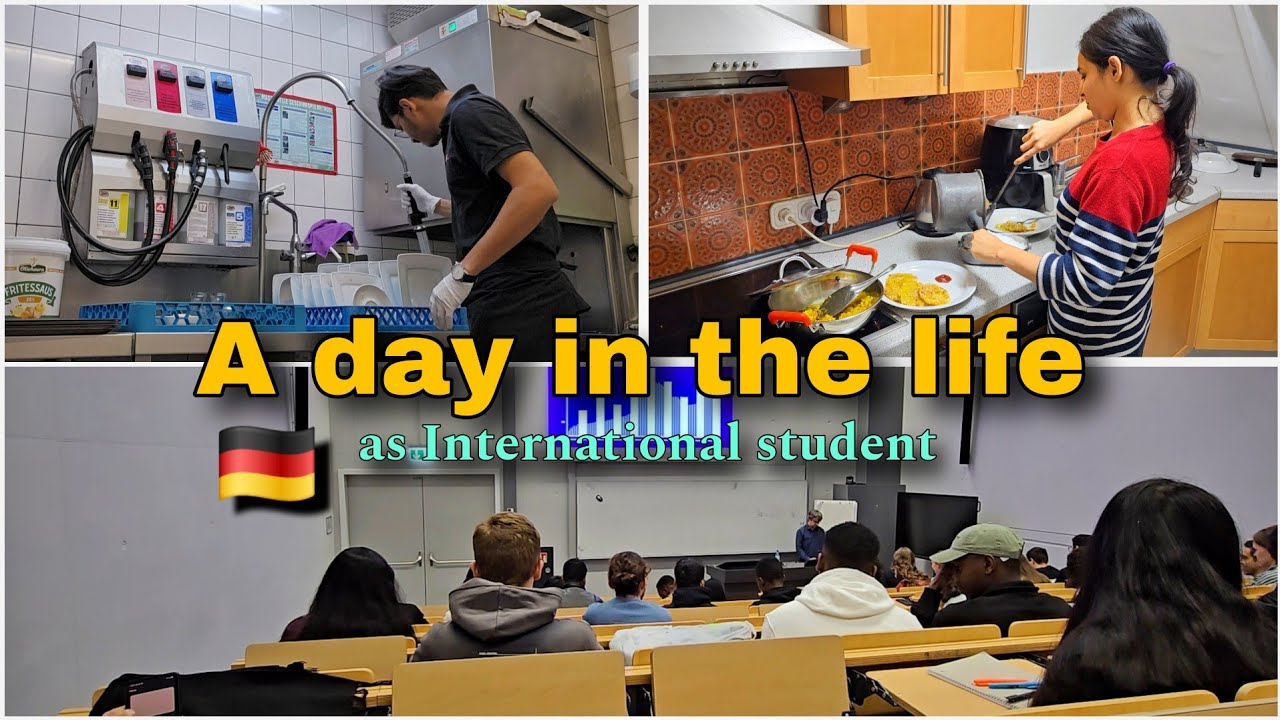 ▶ Student Vlog
 ▶ YouTube
Visa bureaucracy, housing nightmares, cultural adjustment, and real costs.
 ▶ YouTube
Cultural festivals, Indian food finds, and biotech research life.
 ▶ YouTube
Visas, housing tips, budgeting, and job opportunities.
 ▶ YouTube
Fresh off the plane — culture shock moments and early life in Germany.
Germany combines academic excellence with an unbeatable cost advantage. No other top-10 destination lets you study at a world-ranked university for nearly nothing.
Public universities charge no tuition fees to international students — including Indian and Pakistani students. Pay only a semester contribution of €150–350 (often includes a free transit pass for the city).
TU Munich, RWTH Aachen, KIT, and TU Berlin rank among the world's best for Mechanical, Electrical, and Civil Engineering. German engineering credentials carry unmatched weight in automotive, aerospace, and manufacturing industries worldwide.
Germany actively recruits skilled workers. The Skilled Immigration Act (2020) and EU Blue Card make it straightforward to convert a student visa to a work permit — then to permanent residency within 2–4 years.
After graduating, you get 18 months to search for a job at your qualification level. During this period you can work part-time. Once employed, you switch to an EU Blue Card or work permit with a clear path to PR.
Based in Germany, you're within a 2-hour flight of most of Europe. Germany's 96+ universities are spread across dynamic cities — Munich, Berlin, Frankfurt, Hamburg, Stuttgart — each with thriving international student communities.
Over 1,500 Master's programmes in Germany are now fully taught in English — no German required for admission. Fields include CS, Data Science, Engineering, Business, and Renewable Energy. Many universities actively recruit South Asian students.
Core numbers and visa details for South Asian students planning to study in Germany.
All eight institutions below offer English-taught Master's programmes with no tuition fees. QS World University Rankings 2025.
Germany's industrial economy creates strong graduate employment in engineering, technology, and science fields — with growing demand in energy and business.
German universities have specific requirements for Indian applicants — including the mandatory APS certificate and blocked account.
All Indian students applying to German universities must obtain an APS (Akademische Prüfstelle) certificate before applying. The APS verifies the authenticity of your academic records. Apply at the APS India office in New Delhi or Chennai. Processing takes 4–8 weeks; apply early. Fee: ~₹6,500 (€75). Without APS, no student visa is issued.
While public university tuition is free, scholarships can cover living costs, making Germany among the most affordable study destinations in the world.
Germany's cost of living varies significantly by city. Munich is the most expensive; eastern cities like Leipzig and Dresden are very affordable — and the education quality is the same.
Answers to the most common questions from South Asian students considering Germany.
Calculate your tuition ROI — loan repayment, break-even point, and lifetime earnings comparison.
Calculate ROI →Filter 25+ real scholarships by destination, field, and degree level — see what you can apply for now.
Find Scholarships →